
The 4D Experience at the University of Denver
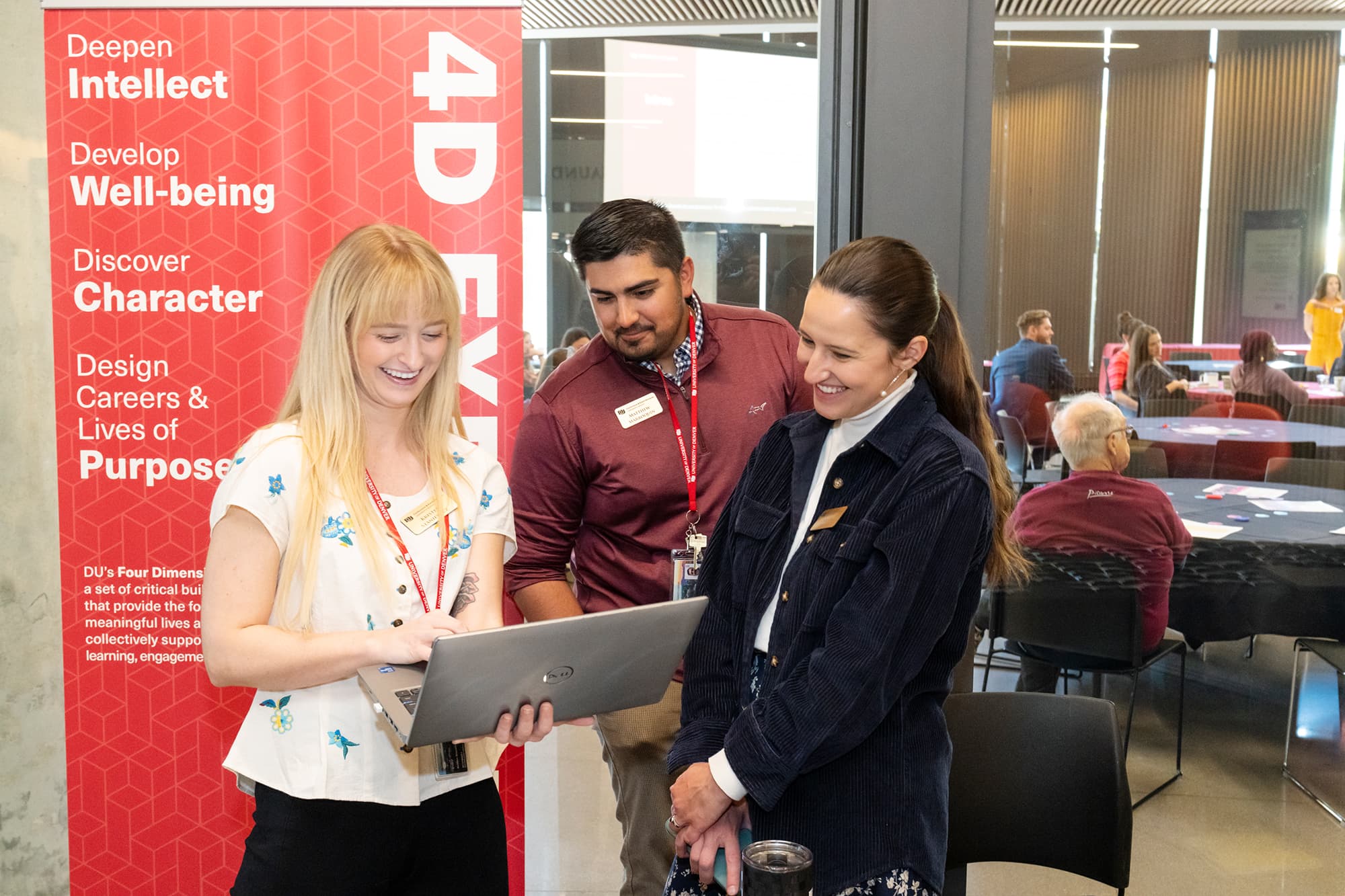
The Four-Dimensional (4D) Experience is a university-wide strategic imperative at the University of Denver that prepares students for lifelong learning, engagement, and flourishing. It does so through nurturing students’ growth across the four dimensions of intellect, character, well-being, and purpose, both in and out of the classroom. Championed by senior leadership, the initiative focuses on fostering this whole-student development through the drivers of experience, mentorship, and reflection.
Signature initiatives include the 4D Design Series, which equips faculty and staff to design curricular and co-curricular learning environments that support students’ purpose, character, and well-being, and the Compassion Lab, a curricular program that helps students understand and enact compassion as a foundation for lifelong thriving.
Problem / Rationale
Students need more than academic skills to thrive. They need a sense of direction, meaning, and purpose; the character strengths to navigate ambiguity and complexity; and a foundation for lifelong well-being. The 4D Experience was created in response to growing evidence that these dimensions are essential to student success both during and after college. The initiative addresses the need for institutions to create scalable, integrated approaches that support students as whole people and that fully deliver on the promise of higher education.
How It Works
The 4D Experience advances strategies, approaches, and structures that make sure that all students have the opportunities, relationships, and habits of thinking and doing to learn, grow, and thrive holistically. In doing so, it works to increase institutional creative capacity and strengthen partnerships across DU divisions, colleges, and schools to deliver on these aims.
Faculty & Staff Development Examples:
- 4D Design Series (launched in Winter 2024) offers interactive workshops that provide faculty and staff with practical strategies and tools for designing rich learning environments that enhance students’ 4D Experience. The series has been co-developed and hosted with the Office of Teaching and Learning. Session topics have included “Designing for Well-being,” “Designing for Belonging,” “Designing for Purpose,” “Designing for Curiosity,” and “Designing for Joy.” Each session includes:
- Personal reflection exercises (e.g., empathy interviews)
- Research and theoretical frameworks (e.g., social belonging interventions)
- Applied design-thinking tools to prototype classroom changes (e.g. design levers)
- A focus on faculty and staff purpose and well-being as a precursor to student flourishing
- 4D Constellation of Support Program offers structured professional development that equip faculty, staff, and graduate students with the frameworks and strategies for caring for themselves, colleagues, and students in order to build a stronger, more resilient community
Institutional Capacity-Building Examples:
- 4D Faculty Teaching Fellows serve as activators and ambassadors who work to advance transformative and inclusive teaching practices that not only support faculty across lines in their respective colleges/schools but also holistic student development in line with the 4D Experience.
- 4D Infusion Grants provide seed funding for faculty and staff to develop new curricular or co-curricular projects that support student well-being, purpose, or character.
- 4D Symposium is an annual university-wide, two-day event that convenes hundreds of students, staff, faculty, and administrators to engage in dialogue around research, practice, and innovative models and ideas that elevate 4D life-transformational educational experiences.
- 4D Digital Experience connects students at every stage of their educational journeys with tailored opportunities, resources, and relationships to support their success. Reflective questions guide students to consider issues related to their academic and professional growth as well as their well-being, character, and purpose.
- 4D Innovations Cohort brings together cross-functional faculty and staff teams in a 12-week design-thinking process to explore and develop collaborative approaches and solutions to issues impacting student thriving.
Curricular and Co-Curricular Integration Examples:
- Compassion Lab is a mobile, in-classroom experience led by DU’s Faculty Fellow for Character. The Lab partners with faculty across disciplines to integrate discussions and activities related to compassion into their courses. The goals are to provide meaningful 4D learning experiences for undergraduate and graduate students that (a) encourage them to think about compassion in their own life and work and (b) equip them with the confidence and skills to enact compassion for lifelong flourishing. Core learning components include developing:
- Empathic capacity
- Understanding and awareness of compassion in daily life
- Practical skills like empathic listening and values-based decision making
- Example classroom experiences include:
- Community-Engaged Writing: students developed higher-quality questions for relationship-building.
- Communication Ethics: students explored tensions between compassion and competing personal values.
- The 4D Peer Mentor Program creates deeper, more sustained relationships and connections beyond a typical orientation leader model. 4D Peer Mentors are students who are paired with a First-Year Seminar (FSEM) to support the incoming students in that course. To prepare, 4D Peer Mentors complete a quarter-long course on peer mentorship, gaining strategies and mindsets to support students in transition as well as developing a reflective practice to make sense of their own leadership and educational journey and to cultivate purpose.
- 4D Reflective Supervision in Student Employment provides supervisors with strategies and reflective questions with which to engage their student employees and prompt deeper reflection on what they are gaining in their employment experience that is helping them grow holistically. This reflective model is meant to help students develop a greater sense of meaning and purpose in work.
How It Was Implemented
- 4D Pilot (Fall 2020 – Spring 2021)
- DU launched a 4D pilot as part of a reimagining of the student experience rooted in the broader DU Impact 2025 strategy.
- Senior leadership, led by Chancellor Jeremy Haefner, set the tone: “rebooting the student experience” to retain engagement while developing purpose-driven institutional practices
- The pilot centered on a set of first-year seminars that advanced 4D values and included a series of co-curricular engagements meant to support students’ engagement with the four dimensions.
- Creating Shared Frameworks and Understanding
- A 4D team was established in Fall 2021 to lead the university in taking a more integrated, sustainable approach to supporting whole-student learning and development.
- A taxonomy was developed that mapped competencies and habits of thinking and doing to the four dimensions (intellect, character, well-being, and purpose) to provide faculty and staff with an understanding 1) of how their current work mapped to 4D and 2) of opportunities to further support student growth across the dimensions.
- The 4D framework was further refined to elevate experiences, mentorship, and reflection that drive and facilitate engagement with – and growth across – the four dimensions
- The 4D Symposium, 4D Infusion Grants, and 4D Innovations Cohort were launched to give faculty and staff opportunities to partner and engage in collaborative efforts to advance this work across campus.
- The 4D team facilitated interactive workshops with divisions and areas across campus to provide campus partners with an understanding not only of 4D as an ethos and approach but also of how they played a critical role in advancing 4D in their respective contexts.
- Fostering Deep Learning and Engagement Through Signature Experiences
- The 4D team has collaborated with campus partners overseeing high-impact practices to create further alignment, support assessment, and increase students’ awareness and understanding of these experiential pathways.
- New 4D signature experiences have also been developed, such as First Ascent, an immersive weekend experience for first-year students at DU’s new Kennedy Mountain Campus.
- Through the 4D Design Series and other professional development trainings and workshops, the 4D team and the Office of Teaching and Learning have provided faculty and staff with the strategies, mindsets, and tools to create rich learning environments that infuse 4D principles in support of student purpose and well-being.
- Elevating a Constellation of Mentorship
- The concept of a mentorship constellation was developed and advanced to deliver on the principles of a relationship-rich education; within this framework, students are connected with a constellation “core” of a First-Year Seminar (FSEM) faculty mentor, the 4D Peer Mentor, and Academic Advisor and a Career Advisor upon their matriculation at DU and then invited to consider how to build out their constellations according to their individual interests and goals.
- The 4D Peer Mentor Program was created, refined, and scaled to create deeper, more meaningful and sustained peer connections during orientation and beyond into the academic year. The program now encompasses a one-credit course and extensive training to prepare students to provide empathic social support to students transitioning to college.
- A university-wide Mentorship Collaborative was established to support coordination, collaboration, and communication that advances an inclusive culture of mentorship; the 4D Constellation of Program was launched to provide faculty, staff, and graduate students with the strategies and tools to grow their mentorship practice.
- Cultivating Reflective Practices Across the Curriculum and Co-Curriculum
- Reflective practices and tools have been developed and shared with faculty and staff in order to support students’ meaning-making; these tools and resources include a Canvas faculty short course on reflection and an ePortfolio guidebook co-created by faculty and staff champions.
- The 4D Experience involves the build out of reflective touchpoints across the arc of students’ educational experience, supporting greater intentionality, understanding, and purpose. These touchpoints include a Major and Career Exploration Lab, micro-credentials, and a Story Mosaic series.
Sample Assessment & Evidence
Faculty Design Series: each session in the series is assessed through an exit ticket, which evaluates takeaways, includes a Net Promoter Score, and allows for additional participant reflections. Participants are also encouraged to submit artifacts that reflect how they have integrated session strategies and principles into their teaching. Highlights from the assessment of the AY24-25 series:
- Faculty participants from five of DU’s colleges/schools.
- Net Promoter Score (NPS): 77. The NPS is a metric evaluating participant satisfaction and enthusiasm in recommending the program to a peer. For reference, a NPS over 50 is considered excellent.
- Qualitative feedback highlighted the “profound value” of interdisciplinary collaboration as well as practical and concrete design-thinking tools and strategies for fostering student belonging, purpose, and curiosity.
Compassion Lab:
- The Compassion Lab engaged 311 students (295 undergraduate and 16 graduate students) in a course-based experience in the 2025 Winter and Spring Quarters, building upon the 2024 pilots that engaged 95 students.
- 91% of students agreed that they had gained an understanding of how to enact compassion in their contexts.
Institutional Assessment:
- Multi-layered approach includes program-specific evaluations, institution-wide surveys (e.g., Student Experience Survey), and emerging longitudinal measures.
- This assessment has evaluated the impact of certain 4D interventions and programs on the student well-being, character, and purpose. For instance, through the partnership with Gallup – made possible by LearningWell – we were able to assess the differences in purpose well-being and character development of students who have participated in the 4D Peer Mentor program compared to those who have not:
- Purpose Well-being
- 69.8% of 4D Peer Mentors agreed that they like what they do every day compared to 57.6% of those who have not served as 4D Peer Mentors.
- 79.3% of 4D Peer Mentors agreed that they learn or do something interesting every day compared to 61.7% of those who have not served as 4D Peer Mentors.
- Character Development
- 97.9% of 4D Peer Mentors agreed that DU has contributed to their ability to view challenging situations as an opportunity to grow or learn compared to 84.2% of those who haven’t served as 4D Peer Mentors
- 87.5% of 4D Peer Mentors agreed that DU has contributed to their ability to appreciate and respond to the emotions and challenges that others were experiencing compared to 79.8% of those who haven’t served as 4D Peer Mentors
- Purpose Well-being
- This assessment has evaluated the impact of certain 4D interventions and programs on the student well-being, character, and purpose. For instance, through the partnership with Gallup – made possible by LearningWell – we were able to assess the differences in purpose well-being and character development of students who have participated in the 4D Peer Mentor program compared to those who have not:
- A dedicated university-wide survey strategy group integrates assessment across divisions and areas to track student growth across the 4D dimensions over time.
Media
- A Constellation of Support
- Mobile Compassion Lab Brings Classroom and Workplace Support
- How to Cultivate Compassion in the Classroom and the Workplace
- 4D in Action: Mentors Help Students Find Their Path
- 4D in Action: DU's Student Employees Add Reflection to Their Task List
- Student-Professor Teaching Collaborations for Well-being
- 5 Questions with DU’s 4D Experience Experts
- How DU Supports Student Mental Health.
- Connections That Count
- 2025-26 4D Faculty Teaching Fellows
- Compassion Lab (video)
- 4D in the Daniels College of Business (video)
Contact
Erin Anderson-Camenzine, Ph.D.
Director of Faculty Innovation, 4D Experience Professor, Communication Studies
erin.anderson-camenzind@du.eduMore in Interdisciplinary Programming
Research Learning Experiences (RLE)
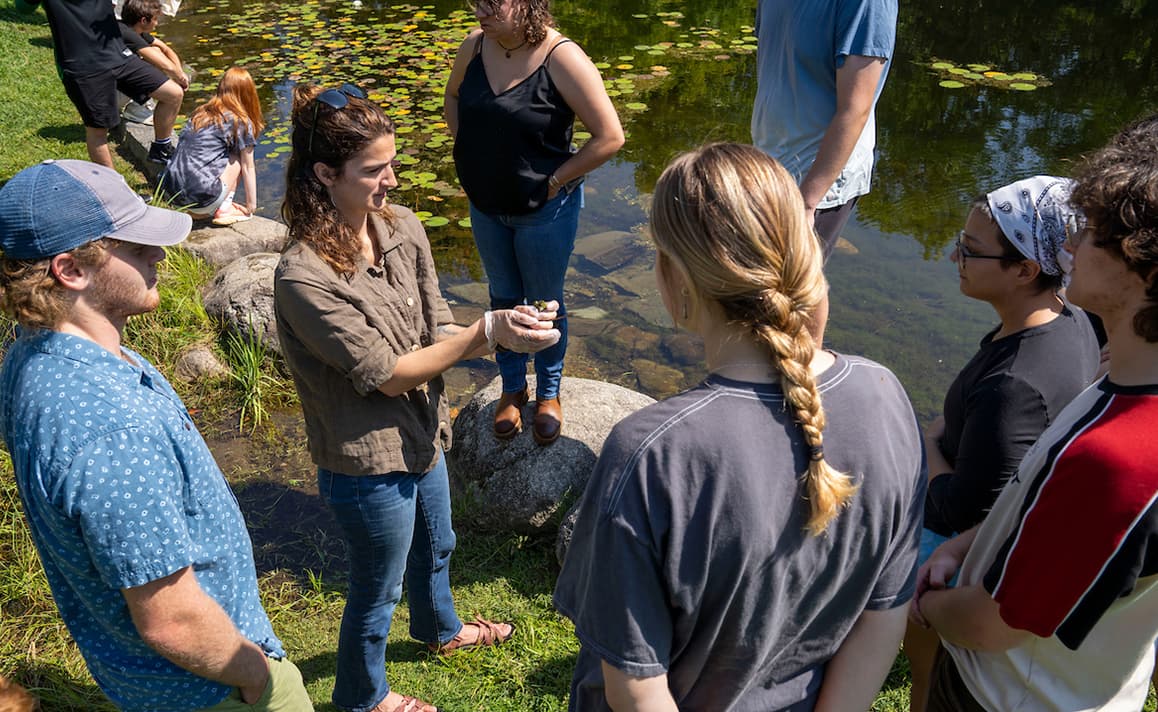
The UMS TRANSFORMS Student Success and Retention Initiative, with funding from a grant provided by the Harold Alfond Foundation, supports a developmental pathway based upon three sub-initiatives: Research Learning Experiences (RLEs), Gateways to Success (GTS), and Pathways to Careers (PTC). The Research Learning Experiences (RLE) program is a signature sub-initiative of the University of Maine […]
University of Maine System